✳ the wire · analysis
OpenAI previewed 'Astra' in Washington — and published ten proofs to prove it is real
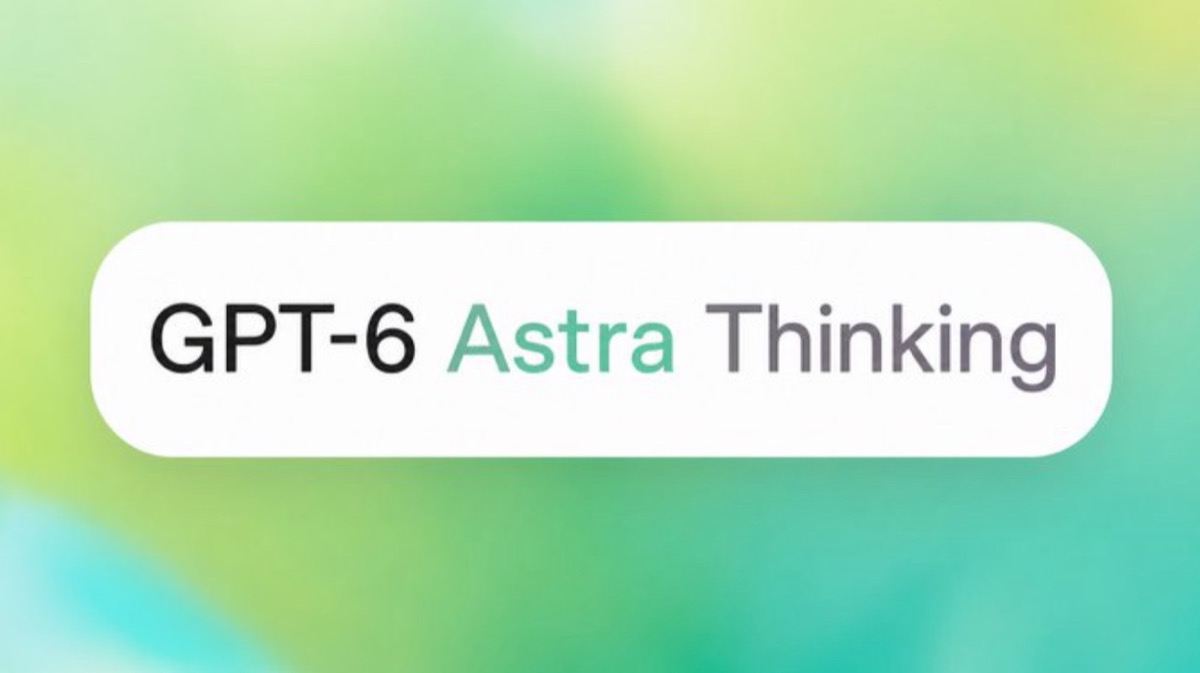
Sam Altman demonstrated a new OpenAI model family called Astra to senators and senior Trump-administration officials in Washington this week, per The Information. The pitch is long-horizon multi-agent work: several agents collaborating on one difficult problem for hours or days, rather than one model answering fast.
The unusual part is that OpenAI did not leave it as a private demo. It published a paper of ten solutions to previously unsolved problems in mathematics and theoretical computer science, spanning high-dimensional geometry, coding theory, group theory, quantum complexity, lattice cryptography and extremal combinatorics — with formal Lean proofs attached, which makes them machine-checkable rather than merely plausible. That is about as close to a falsifiable capability claim as this industry produces.
The caveats are in the same document and worth stating. Human researchers helped convert the model's arguments into formal papers; OpenAI's claim is that the mathematics is the model's, not the write-up. Noam Brown of OpenAI noted the obvious ceiling — no Millennium Prize problems. Thomas Bloom, a mathematician at Manchester, called the constructions genuinely significant while pointing out they draw on a century of human work. The ten results cost roughly $2,000 at API rates, which is its own quiet data point about what long-horizon inference costs.
For the watchlist, the naming is the operationally important detail: OpenAI has not decided whether this ships as GPT-6, as GPT-5.7, or as a fourth class beside Sol, Terra and Luna. So Astra now sits on the board as its own armed entry ALONGSIDE gpt-6 and gpt-5-7, rather than replacing either. Whichever id actually appears in a public catalog is the one that fires. Both catalogs were pre-checked clean before arming.
One more thread to watch: Astra is expected to be the first model submitted under the administration's planned pre-release federal review framework. If that holds, the gap between 'previewed to regulators' and 'available to you' becomes a policy question rather than an engineering one — and that is a new kind of launch date to have to track.
Source: The Information · OpenAI's ten-proofs publication · The Decoder ↗ · GPT-6 Astra tracker · the bench index